
Japanese Knotweed and Home Damage in Indiana
Something growing in your backyard or along the side of your house could cause significant damage. Not only can aggressive tree roots shift the soil beneath your home’s foundation, but invasive weeds also follow suit.
The Indiana Invasive Species Council publishes a list of 126 invasive plants in our state. They range from kudzu and field bindweed to buckthorn and crown vetch.
All these plants do serious damage to our environment. One of the worst in terms of potential damage, not only to the environment but to our homes, is the Japanese knotweed.
Learn more about how to identify this weed, what it can do to your house, and how local foundation repair professionals can help you repair and protect your home.

What Is Japanese Knotweed?
Japanese knotweed is a weed native to East Asia. It can be found across the United States, including throughout Indiana.
This weed grows up to three inches per day in season. It also reaches up to 10 feet tall, and its roots can grow 20 feet deep. The rhizomes can spread up to 70 feet from the nearest stem.
It can re-grow from a tiny bit of the plant, often as small as a half-inch. Plus, its underground network of rhizomes sends out lateral shoots and roots that can lie dormant for years. All this makes it extremely difficult to eradicate.
How To Identify Japanese Knotweed
The stem of this weed is a hollow, segmented cane with expanded nodes that resemble bamboo. It’s green with purple speckles and can appear reddish-brown. Staggered along the stem, the leaves are bright green and heart-shaped, also with purple speckles.
Tiny one-eighth-inch, creamy white flowers form in plume-like clusters up to four inches long from late August through September. You can find a comprehensive identification guide, including a video guide, at Knotweed Help.
Damage From Japanese Knotweed
The weed forms dense thickets, crowding out native species and reducing wildlife habitat. If that growth is near a stream, even a small portion of the rhizome can be carried downstream to start new colonies.
If the weed moves into your lawn, here’s what the root growth can do:
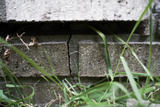
- Shift the soil under and around your foundation
- Potentially enter and widen wall cracks
- Wrap around, break, and clog drainpipes
- Grow underneath concrete and asphalt
- Break up driveways, patios, and sidewalks
- Damage stone or brick retaining walls
This invasive weed’s spread creates a significant economic cost. As one example, since 2010, New York City has spent more than $1 million on eradication efforts for a 30-acre patch of Japanese knotweed.
That’s the cost of eradicating the weed. But it doesn’t include the impact on a home’s resale value. Additionally, there’s also the cost of repairing the damage to a home’s foundation, concrete, and lawn.
How To Get Rid of Japanese Knotweed
There are several steps you can follow to eradicate the weed:
- Cut the stems and remove the clippings
- Cover the area with a tarp
- Place a plastic barrier in the soil to stop root spread
- Excavate the area to a depth of at least 20 feet
- Apply a glyphosate-based herbicide
All these approaches take time and considerable effort. They also pose their own risks of damage to your lawn and garden.
The most straightforward way to deal with this weed is to consult an expert who has the experience to remove the plant without spreading it elsewhere in the process.
How to Repair and Protect Your Foundation
If your home has sustained foundation damage, whether from invasive Indiana plants or unstable soil, it’s important to repair it and protect it the right way. As homeowners ourselves, our team at Indiana Foundation Service understands the challenges of foundation problems and their underlying causes.
We also provide world-class customer service and solutions to permanently repair and protect your home, including:
Foundation Pier Systems
To stabilize settling foundations, our advanced pier systems are designed for long-term strength and reliability:
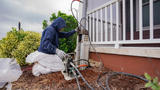
- Helical Piers: Installed by screwing into stable soil layers, these round-shaft piers provide strong, immediate support for lighter structures.
- Push Piers: Also known as resistance piers, these piers are driven deep into load-bearing soil to transfer your home’s weight away from unstable ground.
- Slab Piers: Specifically designed for concrete slab foundations, these piers lift and stabilize sunken floors.
Tailored to fit your home’s foundation type and repair needs, these pier systems permanently reinforce your home by addressing settlement at its source.
Wall Repair Solutions
When basement walls bow, crack, or lean under pressure, our wall repair systems provide effective stabilization and protection:
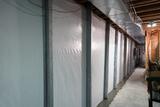
- Wall Anchors: Secure walls by connecting interior plates to anchors buried in stable exterior soil.
- Wall Braces: Steel beams brace and can potentially straighten basement walls without extensive excavation.
- Carbon Fiber Reinforcement: Strong, low-profile straps that hold walls in their current positions and prevent further bowing and cracking.
These solutions ensure your foundation walls remain secure, preventing worsening structural damage.
Crawl Space Structural Repair
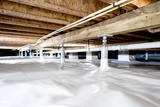
For homes with sagging floors or failing crawl space supports, our solutions restore strength and stability where it’s needed most:
- Crawl Space Support Posts: Adjustable steel posts that reinforce weakened joists and beams to stabilize and potentially lift floors.
This approach protects your home’s structural integrity, giving you peace of mind and a safer living environment.
IFS Has Your Foundation Repair Needs Covered
During our 30 years in business, our team at IFS has repaired thousands of homes impacted by foundation damage throughout Indianapolis and the surrounding area. The only way to know exactly what your home needs is with a thorough inspection.
If you find invasive trees and weeds on your property, contact the professionals at Indiana Foundation Service for a free inspection to determine if your home has sustained Japanese knotweed damage.
Root Damage FAQs
Tree roots don’t directly destroy foundations; instead, they shift soil in their search for moisture, which destabilizes the foundation above. Preventative measures include root barriers, waterproofing, or tree removal, and new trees should always be planted at least 20 feet from your home.
Your foundation’s vulnerability depends on the type of tree or bush, its distance from your home, and seasonal conditions. Fast-growing species like elms and silver maples, or trees planted within 20 feet of your home, pose the greatest risk. Older homes, poor drainage, and expansive soils increase the likelihood of root-related foundation damage, so regular inspections are key.
The first step is confirming roots are the actual cause of your foundation issues, which requires a professional inspection. If you choose to keep the tree, root barriers and careful planting of slow-growing species can minimize damage. If removal is necessary, options include professional cutting or using herbicides, but both should be done safely to prevent ongoing issues.
Related Resources

Holly Richards-Purpura
Publish Date:
Last Modified Date:
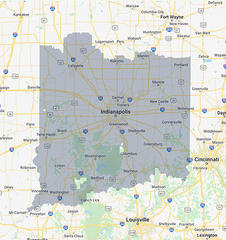
Our Locations
624 North Front Street
Whiteland, IN 46184
2731 Albright Rd
Kokomo, 46902
8 N 3rd St
Lafayette, IN 47901