
Leaning Chimney
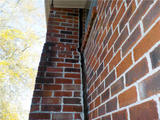
A fireplace can be a cozy and charming addition to your home, but it’s important to remember that a leaning chimney can pose a major safety risk.
This is a common issue that homeowners often overlook; if ignored, a chimney pulling away from house can compromise the integrity of your chimney’s structure and put your home in danger.
At Indiana Foundation Service, we know how important your home is to you, and we’re committed to providing you with the best possible care. We specialize in providing whole-home solutions, which include brick chimney repair using our advanced foundation repair products and methods.
Learn why your chimney may be cracking or leaning and how fixing it can keep your entire home stable and your family safe.
What Is a Leaning Chimney?
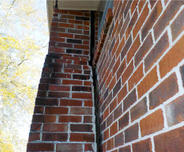
A leaning chimney occurs when the exterior chimney separates or pulls away from the house.
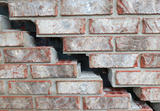
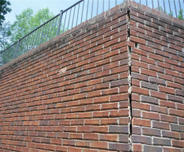
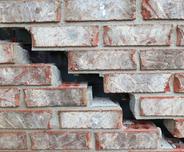
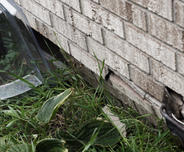
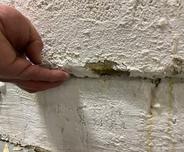
Cracks can appear in various areas, such as the flue, chimney crown, and the body of the chimney along the masonry or stonework. As shown here, they are most evident in the mortar joints between the bricks. However, these fractures are not just a cosmetic issue; they can lead to severe problems, including water leaks, reduced efficiency, and structural instability.
You might detect gaps between the bricks in the chimney body, which can cause additional damage and cause it to lean or pull away from the rest of the house.
Rest assured that our team of experts will address these issues and restore your chimney to its former glory.
What Causes Chimney Pulling Away from House?
Several factors can cause a leaning chimney, the most common being foundation settlement due to soil instability. Central and Southern Indiana features expansive clay-based soils vulnerable to moisture fluctuations.
Soil instability can arise due to various factors, such as:

- Wetting and Softening: After heavy rainfall, flooding, and snowmelt, the soil absorbs the water, expands, and gradually loses its ability to support the weight of the chimney.
- Erosion: Excessive moisture and flooding can erode the underlying soil over time.
- Drying Out and Contracting: During dry periods or drought, the soil contracts, creating voids where the chimney footing can settle.
- Poor Compaction During Construction: Proper soil preparation and compaction are essential before building a chimney. If this step is omitted or not done correctly, the ground may not be able to bear the structure’s weight.
- Invasive Tree Roots: Trees with invasive root systems near the chimney can dislodge and shift the soil as they seek moisture and nutrients. This activity destabilizes the soil, allowing roots to penetrate the chimney’s structure.
Chimneys often have a separate foundation from the rest of the house, making them vulnerable to these soil-related issues. When the unstable soil fails to support the chimney adequately, it begins to crack and may separate from the side of the home.
Can You Fix A Leaning Chimney?
Leaning chimneys can be fixed, but we do not recommend DIY methods such as applying sealants or patching up cracks, as these are short-term solutions.
The ground beneath the chimney is unstable, and it will continue to shift, potentially reopening old cracks or causing new ones. The only way to fix the problem is to adopt a whole-home approach.
The Indiana Foundation Service repair team finds the cause of the problem and uses specialized techniques to fix it permanently. Because every house is unique, we offer customized foundation repair options, such as foundation pier systems.
Professional Brick Chimney Repair Process
1. Inspection and Diagnosis
Our experts thoroughly inspect your home, foundation, and chimney. We evaluate and note the extent and location of the leaning, cracks, and other damage.
2. Install Foundation Piers
The best tools to address a chimney leaning away from house are foundation piers, which permanently stabilize and potentially lift the chimney back to its original position. This may help close cracks and gaps, but further masonry may be needed afterward.
Depending on the soil and condition of the chimney, we install either helical piers or push piers deep into the ground until we reach a stable soil layer. Our helical pier system is ideal for lighter loads, including chimneys. Here’s what the process entails:
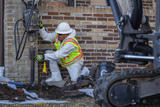
- Excavate the soil down to the chimney footer
- Use hydraulic equipment to advance the piers into the soil
- Monitor the pressure and depth of installed piers
- Advance the screw-like piers until they reach stable soil or bedrock
- Attach a durable steel bracket to the footing, ensuring load transfer
- Install small rivets in the exterior brick as benchmarks
- Backfill excavated soil
3. Annual Chimney Maintenance Inspections
Our service and maintenance programs guarantee continued foundation pier reinforcement. We return for annual inspections, ensuring that a laser level perfectly aligns with our benchmarks. This guarantees the continued security of the system.
Why Invest In Chimney Repair Now
Delaying brick chimney repair worsens the chimney’s condition and leads to safety hazards and costly future repairs. Here’s how you’ll benefit from quickly identifying and resolving these issues:
- Avoid Safety Concerns: Ignoring cracks can lead to structural instability and eventual collapse.
- Prevent Moisture Intrusion: Cracks allow water infiltration, accelerating deterioration, and structural issues.
- Evade Fire Hazards: A compromised chimney is in danger of tipping over and poses a fire hazard.
- Cost-Efficiency: Early intervention is often less expensive than late-stage repairs.
- Boost Home Value: Maintaining your chimney enhances your property value.
Indiana Foundation Service addresses chimney issues with specialized, proprietary solutions for long-lasting repair and stabilization.
Contact Indiana Foundation Service for Permanent Chimney Repair Solutions
A cracked or leaning chimney can quickly become a safety hazard, threatening your home and family. If your chimney is damaged, don’t avoid repairs; contact Indiana Foundation Service today for assistance.
We provide a free, no-obligation inspection to evaluate your home and recommend the best repair solutions. Trust Indiana Foundation Service for all your chimney and foundation repair needs.
Leaning Chimney FAQs
A leaning chimney typically indicates serious foundation problems, often caused by soil settlement or water damage beneath the chimney’s base. This structural issue usually worsens over time and can pose significant safety risks to your home and family. Professional inspection and repair are essential, as a leaning chimney can eventually collapse if left unaddressed.
A leaning chimney doesn’t automatically make a house unworthy of purchase, but you should get a thorough inspection from a structural engineer first. The repair costs should be factored into your purchase negotiation, as chimney repairs can be expensive. Having a clear understanding of the repair scope and costs will help you make an informed decision.
A separated chimney requires professional repair methods, such as helical piers, to address the root cause. The specific repair method will depend on the severity of the separation and underlying foundation issues. This is not a DIY project and should only be handled by qualified foundation repair experts.
Before filling any gaps, the underlying foundation issues must be addressed by a professional to prevent the problem from recurring. The repair process typically involves fixing the foundation, installing proper flashing, and sealing the gap with appropriate materials. Contact Indiana Foundation Service for an inspection if you notice gaps forming between your chimney and house.
Explore more problem signs

Our Locations
624 North Front Street
Whiteland, IN 46184
2731 Albright Rd
Kokomo, 46902
8 N 3rd St
Lafayette, IN 47901